Key Takeaways
Proper bunk adjustment protects your hull and lift
Different hull types require different bunk positioning
Spring boat changes often require lift setup changes
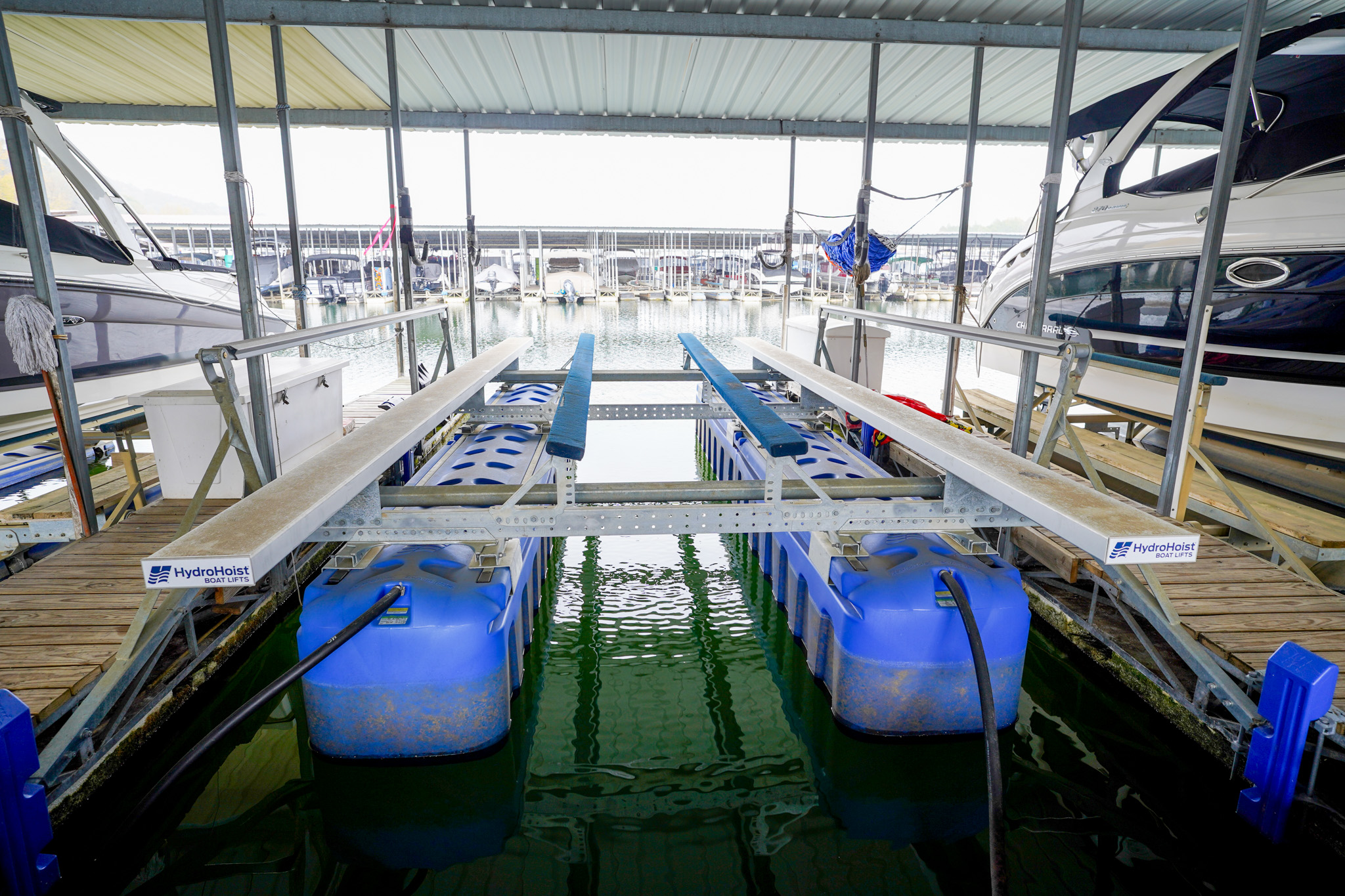
Why Bunk Adjustment Matters When You Change Boats
Hulls are designed to handle pressure evenly across their surface or along reinforced stringers. If the bunks don’t match the hull shape, the weight of the boat will be concentrated on a few hotspots. This uneven loading can cause the fiberglass to flex, lead to spiderweb cracking in the gelcoat, or even cause structural delamination over time.
Even small differences in hull shape, weight distribution, or beam width can affect how the boat sits on the bunks. If large wakes hit or a storm rolls in, a poorly fitted boat can slide or tilt on the lift. Conversely, when the boat’s weight is evenly distributed across the bunks, the lift raises the vessel smoothly without stressing the hull or overloading the lift’s components.
Additionally, properly angled bunks effectively cradle the vessel, centering it as you drive onto the lift. If the bunk fit is off, you may find yourself constantly repositioning to align the boat, fighting against drift, and risking damage to both hull and lift hardware.
Identify Your Hull Type Before Adjusting
Take a moment to assess your vessel’s hull type. Different designs require different support points, and knowing your hull type helps guide where the bunks should sit. Meanwhile, different types of boat lifts offer varying levels of adjustability for specialized hulls, such as tritoons or high-performance stepped bottoms.
For example, V-hull boats typically need bunks positioned so the hull stays centered while the keel remains clear of structural lift components. Pontoon boats require wider bunk spacing to support the outer tubes evenly, while tritoons often need additional center support to accommodate the third tube.
It’s also important to consider where the boat carries most of its weight. Engines and fuel tanks often sit near reinforced stringers, so bunks should align with these stronger areas whenever possible. In many cases, slightly wider bunk spacing can improve stability, while narrowing the forward ends may raise the bow if needed to help water drain toward the bilge (The Hull Truth, 2023).
While hull shapes and manufacturer recommendations may vary, the goal is to position the bunks so they support the hull's strongest parts while keeping the boat level, centered, and stable on the lift.
Step 1: Position the Lift Without the Boat
Set the lift to a position that makes it easier to reach the bunk hardware and safely reposition components. Next, check that the lift frame is level in the water. A level frame helps ensure the bunks will support the hull evenly once the boat is loaded. If the frame is tilted, the boat may settle unevenly during lifting, putting unnecessary pressure on certain areas of the hull.
Then, loosen the bunk brackets and hardware enough that the bunks can be repositioned. Many modern systems (including HydroHoist lifts) feature adjustable bunk mounts that make it easier to fine-tune placement when switching boats.
Step 2: Adjust Bunks for Proper Hull Contact
Position the bunks so they follow the natural shape of the hull. The goal is to create even support along the strongest parts of the hull, often near internal stringers and the transom, where the engine weight is usually concentrated.
Keep the bunks as parallel as possible and avoid placing them directly under chines or strakes. These raised edges are designed to help the boat move through water, but they can cause the hull to shift or catch on the bunks as the boat lifts. Properly aligned bunks allow the boat to settle naturally into position.
While you want a snug fit, if the bunks are too perfect to the keel lines, you’ll end up fighting the boat every time you dock. Give yourself enough margin so the boat can guide itself into the cradle naturally.
Make small adjustments as necessary to improve how the boat sits on the lift. For example, slightly lowering the stern bunks can make stepping into the boat from the dock easier and safer, while still keeping the engine or outdrive safely above the waterline. Raising the bow just a little can also help rainwater drain toward the bilge pump instead of pooling inside the boat (Reddit, 2020).
Step 3: Test Fit With a Partial Lift
Once the bunks are roughly positioned, bring the boat onto the lift and perform a partial lift test. Raise the boat only a short distance, just enough to confirm the hull is making even contact along the entire length of the bunks.
Watch closely for signs that the boat is shifting, tilting, or settling unevenly. If one bunk carries noticeably more weight than the others, or if the hull appears to twist slightly, lower the lift and make incremental adjustments to the bunk spacing or angle. A half-inch shift at the bracket can make a three-inch difference in how the boat sits.
Taking the time to test slowly is important when learning how to adjust boat lift bunks. A few careful trial lifts can help you dial in the setup so the boat sits level, stable, and properly supported every time you raise it.
Common Mistakes to Avoid
One of the most common mistakes when adjusting boat lift bunks is setting the bunks too narrow or too wide. If the bunks are too close together, the hull may sit too high or become unstable. If they’re too far apart, the boat may not center properly during loading. This can also put undue pressure on the thin outer hull.
Ignoring keel alignment on V-hulls is another common issue. The keel should remain centered and clear of lift beams so the hull rests naturally on the bunks instead of contacting hard structural components. Similarly, many inboard and wake boats have rudders, propellers, tracking fins, and other sensitive components sticking out of the bottom, which can hit the lift’s metal cross-beams. Ensure there is at least 2–4 inches of clearance between the lowest piece of hardware and the lift frame.
Finally, never skip the test-lift. A controlled test‑lift allows you to confirm that the bunks are carrying the boat’s weight evenly, that the hull is centered, and that no hardware is making contact with the lift frame.
For more information, check out our blog on boat lift maintenance tips.
When to Get Professional Help
Most boat owners can make basic bunk adjustments with patience and careful testing. However, there are situations where professional guidance can help ensure the lift is set up correctly and safely.
For instance, boats with unusual hull shapes, stepped hulls, or unique configurations may require more tailored support than DIY bunk adjustments provide. In such cases, working with an authorized boat lift dealer or lift specialist can ensure the lift operates safely without causing unnecessary hull stress.
If the boat consistently drifts or sits unevenly despite your best efforts, it’s best to call the pros. Experienced technicians can quickly identify proper support points and fine-tune the lift setup, so your boat rests securely, lifts evenly, and remains stable under normal conditions.
However, if you find that your current setup simply cannot be dialed in for your new vessel, you might consider choosing the best boat lift specifically engineered for your hull's requirements. Enter your zip code in the dealer locator tool below to get a list of authorized HydroHoist partners near you.
FAQs
How do I know if my lift bunks are set correctly?
A properly adjusted bunk setup allows the boat to sit level and stable when lifted, with the hull making even contact along the bunks. The boat should not shift, tilt, or rock as the lift raises it. You should also see consistent support along the hull rather than pressure concentrated in specific areas. If the lift raises smoothly and the boat stays centered, your bunks are likely positioned correctly.
Can one lift fit multiple boat types?
Many modern boat lifts are designed with adjustable bunks so they can accommodate different hull shapes and sizes, provided the boat's weight falls within the lift’s rated capacity. However, moving from a V-hull to a pontoon or a specialized surf boat may require swapping out the standard bunk boards for hull-specific conversion kits to ensure proper support.
Do pontoons and V-hulls use the same bunk setup?
No, pontoons and V-hull boats require different bunk configurations because their hull shapes distribute weight differently. V-hull boats typically use bunks positioned to support the angled hull while keeping the keel centered. Pontoon boats require wider spacing so each tube is evenly supported. Setting up the bunks to match the hull design helps maintain balance and stability during lifting.
Should bunks be adjusted every season?
While you don’t necessarily need to adjust your bunks every season, we recommend inspecting the lift hardware and bunk carpet every spring to ensure nothing has shifted or worn down.
Adjustments may be needed if you change boats, notice uneven contact, or see signs that the boat is no longer sitting level.
References:
The Hull Truth (October 12, 2023). How to set my bunks on my lift?, https://www.thehulltruth.com/boating-forum/1298484-how-set-my-bunks-my-lift.html
Reddit (2020). r/boating Boat lift bunks, https://www.reddit.com/r/boating/comments/g06j5j/boat_lift_bunks/

