Key Takeaways
Marina modernization boosts tenant satisfaction and long-term ROI.
HydroHoist lifts and ports deliver 20+ year lifespans, improving asset value.
Ports and floating systems create new monetizable space for marinas.
Leasing models maximize flexibility for tenants while supporting marina profitability.
Future-ready infrastructure attracts premium boaters and long-term leases.
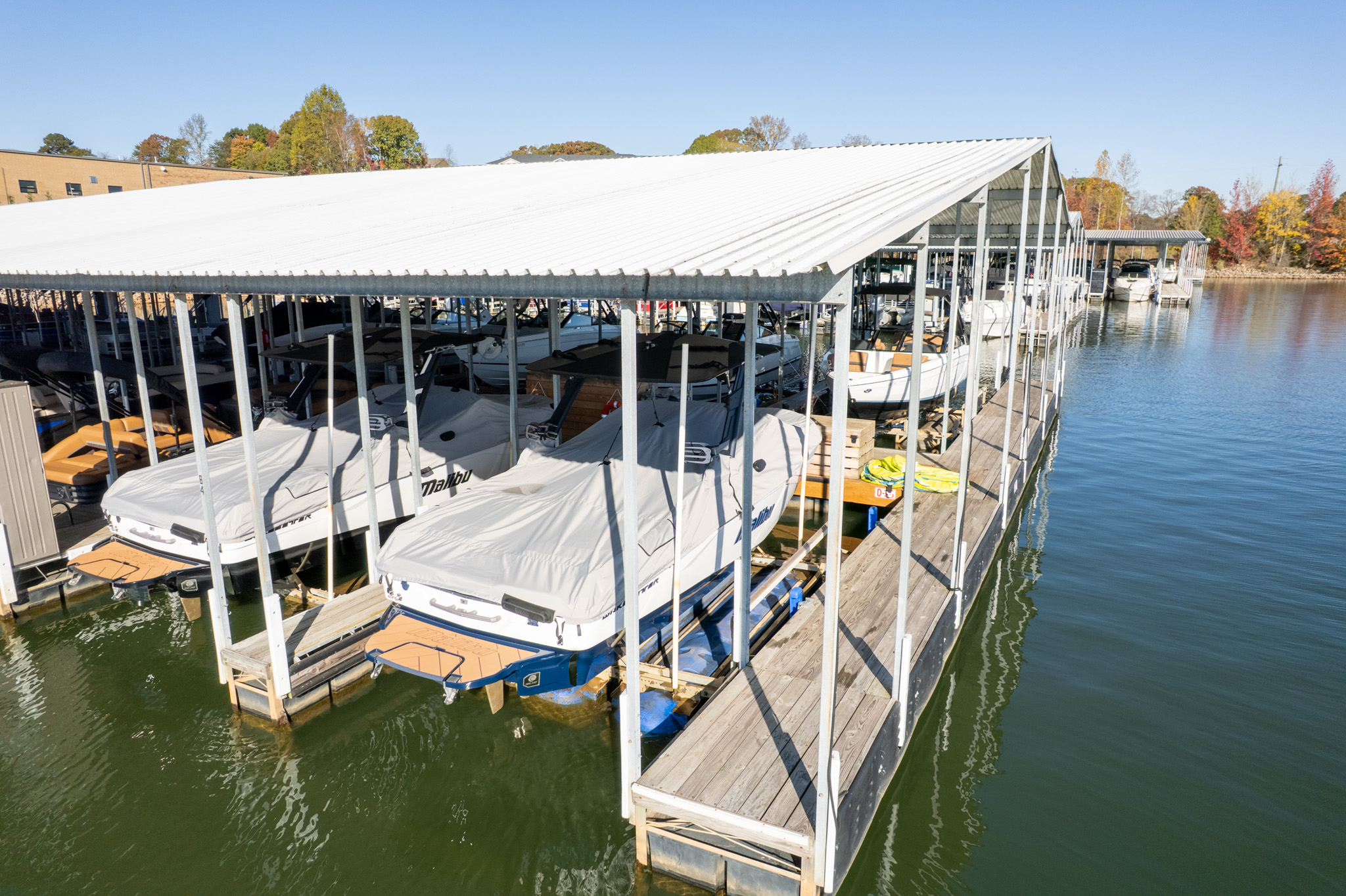
Why Modern Marina Infrastructure Matters
The modern marina is undergoing a fundamental transformation. No longer just a place to store and service boats, today’s premier marinas are evolving into comprehensive lifestyle destinations, offering a range of amenities and services to attract and retain more customers. From diverse dining options and entertainment spaces to concierge services and state-of-the-art facilities, modern marinas are redefining what it means to be on the water.
In this competitive environment, where convenience and vessel protection are primary benchmarks of customer satisfaction, investing in infrastructure like premium boat lifts can open up valuable, long-term revenue streams.
Lifts as Long-Term Investments
Premium boat lifts allow marinas to tier their pricing and maximize slip revenue. In the US market, lift-equipped slips typically command 20% to 40% rental over standard wet slips. This means that a commercial-grade lift costing $10,000–$15,000 can pay for itself in roughly three years, generating an additional $3,600–$4,000 annually through monthly premiums and standard “lift‑up” fees.
Beyond the financial returns, marina lifts drive customer loyalty. Discerning boaters are increasingly protective of their vessels and are reluctant to return to wet-storing once they’ve experienced the convenience, security, and protection of a lift (360 Research Reports, 2026). Compared to dry-stacking, which requires the owner to call ahead and wait for a forklift, a boat lift provides instant availability, 24/7.
For marina operators, this transforms a standard wet slip into a premium offering—one that delivers both higher margins and stronger retention.
Increasing ROI with Floating Ports and Platforms
With waterfront real estate at a premium, marinas are under pressure to make every square foot of water work harder (ez Home Search, 2025). Modular floating docks and lift systems allow operators to repurpose unused or irregular spaces, turning overlooked corners into profitable slip configurations.
Because these systems don’t require permanent pilings, marinas can continually reconfigure their slip mix to meet shifting demand, whether accommodating personal watercraft (PWC) and small‑craft owners or larger center‑consoles and pontoons eager for secure, convenient docking.
By layering these offerings alongside traditional wet slips, marinas create diversified revenue streams while enhancing customer satisfaction. The result is a more resilient business model, one that maximizes marina ROI by transforming underutilized water space into high‑value assets.
The Leasing Model for Marinas
For many operators, leasing boat lifts offers a flexible path to profitability. Instead of requiring upfront purchases, lease programs spread costs over time, giving tenants access to premium equipment without the barrier of ownership. This model enhances customer satisfaction by lowering entry costs while providing marinas with predictable, recurring revenue streams.
Of course, leasing comes with its own challenges. Because tenants don’t purchase outright, marinas must manage inventory carefully and anticipate demand cycles. Repeat purchases are limited, and operators must balance lease terms with maintenance schedules to ensure equipment longevity.
Flexible lease-to-own programs can help address these challenges. By offering tenants the option to convert leases into ownership after a set period, marinas capture long‑term commitment while still enjoying the stability of monthly lease payments. When thoughtfully structured, these programs can align marina ROI with customer loyalty, effectively turning flexible leasing into a sustainable growth strategy.
Future Trends in Marina Infrastructure
As the recreational boating industry continues to thrive, we will see more and more marinas integrate technologies and design philosophies that make operations smarter, more adaptable, and more sustainable. Smart lift systems are already reshaping boater expectations, offering features such as remote monitoring, automated adjustments, and predictive maintenance that minimize downtime while enhancing vessel protection.
At the same time, modular, scalable dock systems are redefining how marinas utilize space. These floating platforms enable operators to reconfigure their layouts depending on demand, business needs, and special customer requirements.
Sustainability will be the defining thread that ties these advances together. From energy‑efficient lift motors to eco‑friendly dock materials, infrastructure investments are increasingly judged not only by their ROI but also by their environmental footprint. Forward‑thinking marinas are positioning themselves as stewards of the waterfront—balancing profitability with responsibility to ensure that boating remains a thriving lifestyle for generations to come.
To learn more about the best boat lifts for sale, enter your zip code in the dealer locator tool below. This will give you a list of authorized HydroHoist dealers near you, replete with contact information and driving directions.
FAQs
How do lifts improve marina ROI?
Boat lifts allow marinas to tier their pricing, with life-equipped slips commanding rental premiums over standard wet slips. Marina operators can also lease lifts to create a predictable source of income while lowering the barrier to entry for boaters who want the convenience and protection lifts offer.
How long do HydroHoist lifts last?
HydroHoist lifts are engineered for durability, with many units performing reliably for 20 years or more when properly maintained. They feature dime-welded, marine-grade aluminum frames, galvanized steel components, and high-density polyethylene tanks to resist pitting, crevice corrosion, and other forms of degradation caused by exposure to salt, moisture, and UV rays.
What are common marina leasing models?
Marinas often offer short‑term leases, seasonal contracts, or lease‑to‑own programs for boat lifts. Leasing provides flexibility for tenants who want premium equipment without upfront costs, while giving operators a predictable monthly revenue stream.
How can marinas create new revenue streams?
Operators can repurpose unused water space with lift-equipped floating platforms. Concierge services, flexible lease programs, maintenance packages, and seasonal storage also attract high-value customers. By diversifying their offerings with modern marina infrastructure, operators can transform underutilized assets into profitable amenities.
References:
360 Research Reports (January 19, 2026). Boat Lifts Market Size, Share, Growth, and Industry Analysis, https://www.360researchreports.com/market-reports/boat-lifts-market-211612#:~:text=The%20United%20States%20represents%20the%20largest%20Boat,1.2%20million%20docking%20slips%2C%20and%20roughly%2048
ez Home Search (July 16, 2025). Pros and Cons of Buying a Waterfront Home in Today’s Market, https://www.ezhomesearch.com/blog/pros-cons-waterfront-property-market/


